

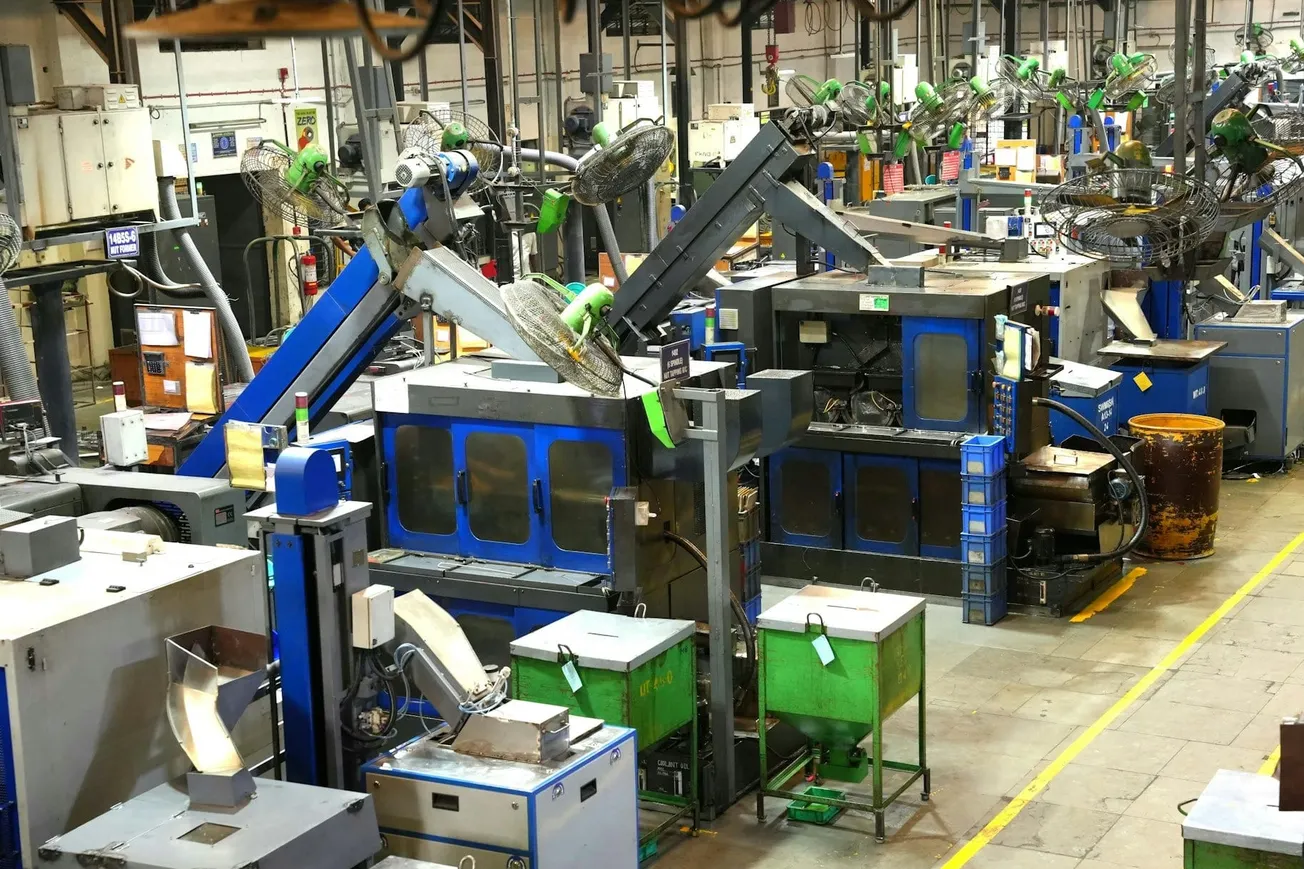
According to the analysis of China's industrial robot development by the China Power Project under CSIS, the real point of focus is how industrial robots are being embedded into China’s manufacturing sector, beginning to transform costs, efficiency, and the competitive landscape. If focus remains solely on humanoid robots that walk and wave, this round of change can easily be misinterpreted as a mere technology demonstration.
However, a deeper transformation is occurring inside factories. Processes such as welding, handling, assembly, cutting, and sorting—originally reliant on a large labor force—are being taken over by more stable equipment capable of long-term operation. For the manufacturing industry, this is competitiveness itself.
I. The Automation Density of Chinese Factories
First, it is necessary to understand the extent to which Chinese industrial robots have expanded. In 2024, China installed 295,000 new industrial robots, exceeding the total of all other countries in the world combined. By 2023, China had 470 robots for every 10,000 factory workers, a robot density second only to South Korea and Singapore. Simultaneously, domestic Chinese suppliers can meet 57% of the country’s industrial robot demand, and the global market share of Chinese industrial robot exports has risen from 5.9% in 2020 to 16.7% in 2024. These indicators demonstrate a posture of expansion: demand is scaling up rapidly, the supply side is continuously filling the gaps, and overseas markets are gradually opening.
Core Indicators of China’s Industrial Robotics
Figure 1 · Scale, density, domestic supply and export reach, 2023–2024
Global market share of Chinese industrial robot exports
Full 2020–2024 trend, industry breakdown, export share, and international comparisons continue below.