
Table of Contents
Interviews with Consumers and Industry Practitioners
The mind-body-spirit industry has flourished across North America in recent years, spawning a proliferation of spiritual retreat "classrooms" in destinations such as Bali, Indonesia, where devotees travel specifically to study contemplative practices. The sector's rise can be traced to the global Covid-19 pandemic of 2020, when prolonged isolation and remote working arrangements began to exact a psychological toll on populations worldwide. How do consumers perceive this emerging industry? And can yoga instructors carve out a viable livelihood in an increasingly competitive market?
Mental health has emerged as one of the defining global challenges of our era. In 2020, the year the pandemic erupted, senior United Nations officials addressed the 75th General Assembly to extol the virtues of yoga, describing the practice as a "lifeline" during lockdowns that helped individuals maintain physical and mental wellbeing, alleviate the stress and uncertainty of isolation, and unite people across cultures in pursuit of shared values of peace, inclusivity and solidarity.
As individuals began seeking "spiritual wellness," the mind-body-spirit industry expanded rapidly. The concept—encompassing the integration of body, mind and spirit—originated in the United States during the 1960s and has since absorbed elements of psychology, sociology, Buddhism and various religious traditions. It refers to a holistic approach to health that encompasses divination, fortune-telling, psychological healing, meditation, mindfulness and related practices.
The World Health Organization estimates the global wellness market will reach $8tn by 2030. The WHO classifies fitness, wellness, healthcare, beauty, psychological counselling and spiritual healing as activities within the health and mind-body-spirit sector.
The United States and Canada are quintessential immigrant nations. In Canada particularly, new arrivals face emotional challenges including adaptation to unfamiliar environments and separation from family members, making emotional support especially critical. Community-based mind-body-spirit activities may help address this gap.
Escaping the Information Deluge
Sophia, originally from Taiwan and working in California's Bay Area, first encountered mind-body-spirit activities in the summer of 2024. She took a day's leave from her employer to visit Jikoji Zen Center, a Japanese Zen retreat nestled in remote woodland, where she spent two days engaged in "meditation and digital detox" amid birdsong and the hum of insects.
Sophia serves as a senior auditor at one of the Big Four accounting firms. During the off-season, she averages 40 hours per week; during peak periods, her workload can exceed 50 hours. This, she explains, is the typical existence of a Bay Area professional—a life defined by work and consumption. Many colleagues spend their evenings and weekends watching films, shopping and dining out, with "no time to simply be still."
In a region characterised by rampant consumerism, Sophia observes: "Everyone buys so much, consumes so much, yet seems unable to achieve spiritual fulfilment. That's why I wanted to pursue activities beneficial to my mental and physical wellbeing."
She chose to attend a meditation-focused yoga retreat on her 31st birthday, seeking to learn the art of stillness because "life is too hectic and there's too much information coming at us." Meditation, she says, has helped alleviate the anxiety generated by relentless competition. "Looking at a phone with no signal, immersed in nature, you can truly disconnect from the mundane world. In everyday life, we're glued to our phones constantly—it's information overload."
Sophia believes participating in commercial mind-body-spirit activities differs fundamentally from practising at home. She draws an analogy with cinema: "It's like watching a film on your phone versus seeing it in a theatre—the experience is completely different." Achieving relaxation through self-discipline at home proves difficult; organised activities make it "easier to relax, with fewer sensory distractions and interruptions." This represents another motivation for actively seeking digital detox—combating the age of information saturation.
Modern individuals, she argues, struggle to "activate their self-regulation mechanisms," necessitating mind-body-spirit activities as support. The frenetic pace of Bay Area life leaves her feeling tense and in need of relaxation and mental space. "Although putting down your phone can achieve a digital detox, participating in spiritual activities is more effective"—offering relaxation in a tranquil environment with instructors guiding participants into states of emptiness and meditation. During yoga, she explains, certain poses are accompanied by visualisation: "The instructor might say, 'Now imagine you're a banana' for a bending pose, or 'Imagine you're a child' when lying prone. Through this process, you can truly relax."
From a consumer perspective, Sophia believes the industry has not yet developed a culture of excessive consumption: "There's no extreme commercialism. Rather, I've encountered more diverse groups of people who don't constantly talk about how much money they earn." She acknowledges, however, that the Bay Area does host more commercialised mind-body-spirit offerings.
The Commercialisation of Spiritual Practice
Sophia once attended a yoga event organised by a bar. "About 30 people, quite upmarket, with refreshments and drinks provided—rather commercialised. The essence wasn't really meditation; it was more of an influencer-style experience, just stretching and making friends. The primary purpose was social, and it was more expensive." She notes, however, that the market also includes "ordinary yoga studios offering classes for $10 a session—very affordable, not commercialised at all, with nothing being marketed."
"The West Coast is extremely, extremely capitalist," Sophia adds. "Everything is expensive, everything costs money, and you're criticised for tipping too little—it's reached pathological levels. Yet within this industry, I don't sense that atmosphere."
The mind-body-spirit sector has long been established in the United States, though it remains nascent within North American Chinese communities. Chris Marquis, who taught for many years at Harvard and Cornell universities, co-authored an economic report with independent consultant Hu Xin in 2014 titled "Predicting the Development of China's Mind-Body-Spirit Market Based on American Experience." The report identified a trend toward commercialisation in America's mind-body-spirit movement, designating October 2012 to July 2013 as a period of "emerging commercialisation" during which discussion of products and resources rose from 34 per cent to 41 per cent. The period from July 2013 to August 2014 marked the dominance of commercialisation, with the vast majority of social media content related to meditation promoting products, workshops, instructors and related books and audiovisual materials. Discussion of purely spiritual practice declined from an initial 46 per cent to virtually zero by this phase.
According to the latest market research from US consulting firm Grand View Research, the global mind-body-spirit healing market was valued at an estimated $78.58bn in 2023 and is projected to reach $394.73bn by 2030, representing a compound annual growth rate of 26.2 per cent from 2024 to 2030. The report notes that as therapies such as acupuncture and yoga gain mainstream acceptance, mind-body-spirit activities are increasingly recognised by the general public and continue to expand. North America accounted for 21.20 per cent of the global market in 2023. The Asia-Pacific region is forecast to achieve the fastest growth, particularly in China, driven by the integration of traditional Chinese medicine with modern wellness concepts.
The report further notes that traditional therapies including acupuncture, qigong and herbal medicine remain consistently popular among Chinese consumers. Government policies supporting traditional medicine and promoting its integration with Western healthcare systems have created additional opportunities for holistic healing practitioners.
Cultural Divergence Between Coasts
As an organiser, Kathy believes developing a yoga business in western Canada is easier than in Hong Kong. "The mind-body-spirit element is a selling point. In Hong Kong, when people hear about meditation or contemplation, they immediately dismiss you as a charlatan or call it superstition. But people here place greater emphasis on mental wellness and are more receptive—even beginners want to try it."
Kathy immigrated from Hong Kong to Canada several years ago and now resides in a small city in eastern British Columbia. In Hong Kong, she worked as a yoga instructor organising teaching sessions. After relocating to Canada, increased exposure to nature prompted her to study spiritual practice and organise meditation-related activities.
By contrast, "in Hong Kong there aren't many opportunities to connect with nature. Even when you go hiking or on excursions, you quickly return to the city—crowded, full of people, always difficult to quieten the mind." She recalls the limitations of working in the industry in Hong Kong: "In BC, the distance between town and countryside is much greater. Often, during the drive itself, you begin entering a meditative state. Combined with less societal pressure, participants find it easier to achieve that state. For facilitators, the work becomes easier."
Six months after immigrating, Kathy began organising community spiritual activities. "This was a practical way to open doors to teaching. Honestly, I'd been here less than six months. If I wanted to recruit students and teach, I first needed to build a reputation, raise my profile and increase exposure. Hosting community events seemed a good idea." She partnered with local Chinese community groups, initially targeting new immigrants. "But we received numerous enquiries from locals, and I realised it wasn't only new immigrants who had needs—long-term residents also had spiritual requirements."
Since mind-body-spirit activities conducted in Mandarin or Cantonese are uncommon in small cities, Kathy's events attracted substantial Chinese participation from the outset. "Actually, there aren't many Chinese people in a small city—perhaps just over a thousand. One of my initial purposes in organising events was to meet more Chinese residents in town. I hadn't expected my activities to connect them, because similar events are rare." She adds that participants include older retirees who relocated from larger cities such as Vancouver, predominantly women, "both Caucasian and Asian."
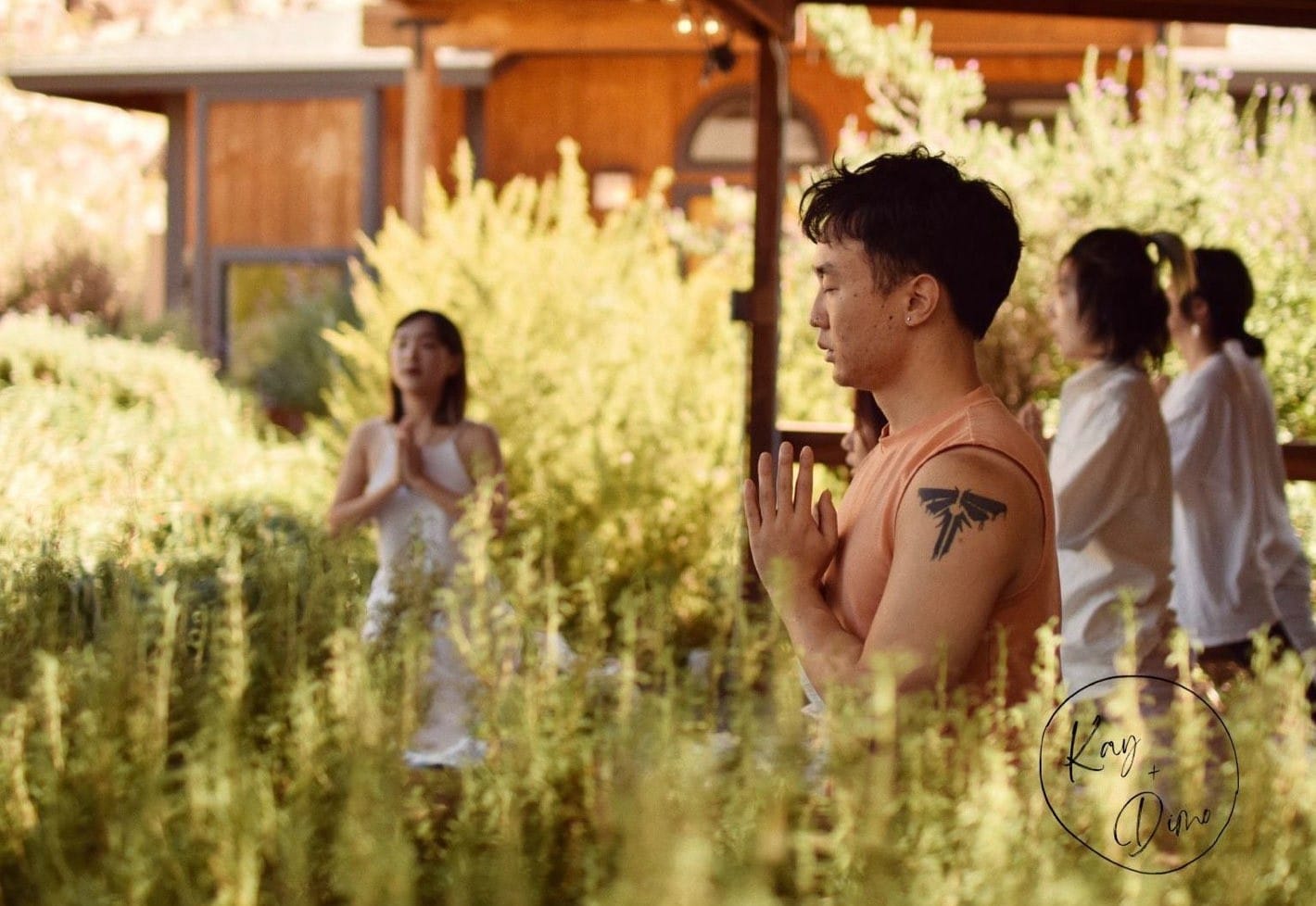
While mind-body-spirit practices are increasingly popular on the West Coast, development on the East Coast has been slower. Kay, a fellow organiser who lived on the East Coast for several years, attributes this to cultural differences. Originally from China and now based in California, Kay produces films and hosts mind-body-spirit events in her spare time, seeking to integrate art with psychological healing and meditation. She likens the development of mind-body-spirit practice to artistic development—through spiritual cultivation, she has created music and poetry, viewing it as part of her artistic practice alongside filmmaking, and hopes to bring participants a sense of genuine emotional connection.
Kay attended film school in New York and lived there for four years. She explains why she chose not to develop her mind-body-spirit practice on the East Coast: "Life on the East Coast is faster-paced; the culture prioritises making money—the quintessential Wall Street mentality. Everyone pursues mental wellness, but the degree and demand don't match the West Coast. Life on the West Coast is slower, with a greater apparent emphasis on work-life balance."
Anticipating Industry Standards
Regarding whether the sector can develop into a full-fledged industry serving Chinese clientele and its future trajectory, practitioners Kathy and Kay both believe North America's mind-body-spirit sector is moving toward industrialisation at a faster pace than one or two years ago. It is becoming more popular and widespread, with the market showing marked improvement compared with 2023.
Kay believes mind-body-spirit has become a trend, noting that the previous "global upheaval" occurred in the post-war era of the 1960s and 70s: "Western economies were booming, the world was in the throes of transformation, and a creative peak emerged. People could heal themselves through various forms of artistic creation." The current mind-body-spirit industry resembles "a miniature version of the 60s and 70s—it depends on whether we can seize this opportunity."
We are currently "in the midst of transformative upheaval," she continues, "including economic change and the dramatic lifestyle shifts brought by the pandemic. But people don't yet fully realise this; they desperately need healing, desperately need the reflection that mind-body-spirit offers." Her hope is that once the sector reaches a certain degree of commercialisation, people may have developed self-healing capabilities—"though that might be 10 or 20 years away."
She adds that North America's mind-body-spirit industry remains relatively new, without major scandals. "But as more people enter the field, quality inevitably varies. Connecting people's minds and bodies is a beautiful thing, but both domestically and internationally there are genuine and fraudulent practitioners. Authentic mind-body-spirit practice doesn't exploit people for profit."
"There may be excessive consumption in the future, but taking a macro view, the industry remains very new globally—we're still far from saturation," Kay continues. Although no regulations currently exist, she anticipates "a certain degree of regulation" in the foreseeable future.
Kathy likewise hopes for the introduction of proper, standardised certifications to regulate the industry's development, similar to yoga instructor licensing. "This would give the public greater confidence, increase their willingness to participate in mind-body-spirit activities, and help them understand how these practices can improve mental health."