
Table of Contents
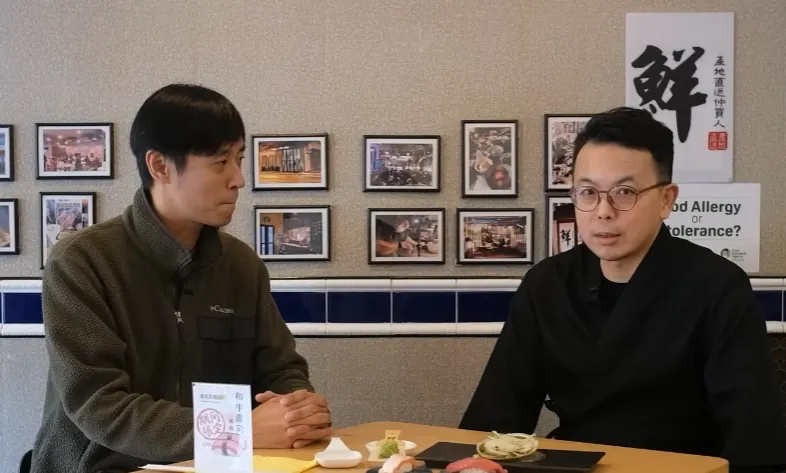
Andrew, a craftsman from Hong Kong with over a decade of restaurant experience, immigrated to the UK three years ago and opened a Japanese restaurant specializing in sushi and sashimi in the small northwestern town of Warrington in late January 2024. Nine months into operation, he maintains traditional craftsmanship, refuses to sell frozen fish, and only serves fresh sashimi and sushi.
He describes himself as a "wanderer" in the UK, settling here purely by chance. In his quest for ideal fish sources, he personally drove north to Aberdeen, Scotland, and south to London's Billingsgate Market to test fish, ultimately establishing his supply chain. This dedication stems from his training experience at Tokyo's Tsukiji Market and laid the foundation for his philosophy of "fish for everyone"—operating on thin margins and high volume so that neighbors can enjoy high-quality sushi.
A Fresh Start After Ten Years in the Restaurant Industry
Andrew spent over ten years in Hong Kong's restaurant industry. He initially ran an izakaya, later ventured into Japanese fusion, Western restaurants, and even opened a cafeteria at the Chinese University of Hong Kong. This experience gave him deep insight into the industry's ups and downs—from borrowing money to get by, to thriving business, to forced closures—countless rises and falls.
Immigrating to the UK was not a carefully planned decision for him. "Actually, I wasn't familiar with the UK at all. I just tagged along with friends to Warrington," he laughs. After arriving in the UK, like many Hong Kongers, he became a "wanderer," settling wherever he could stop. Initially in the UK, he worked as a delivery driver (Uber Eats), kitchen helper, and later entered NHS hospitals as a junior manager responsible for hygiene inspections.
But the call of the restaurant industry never left. In January 2024, he returned to his original passion, opening a Japanese restaurant specializing in sushi and sashimi in Warrington—not just a continuation of his career, but a practice of his Japanese culinary spirit.
Training and Enlightenment at Tokyo's Tsukiji
Andrew's pursuit of Japanese cuisine stems from his early training experience at Tokyo's Tsukiji Market. While running his izakaya, he traveled to Japan to work as a wholesale apprentice at the fish market for a year and a half.
"At first, there was actually no salary. I closed my Hong Kong shop and went straight there to train and learn." At Tsukiji, he witnessed firsthand the Japanese approach to ingredients—their rigorous standards and division of labor. This experience established his later restaurant philosophy: a sushi bar is a sushi bar, a ramen shop is a ramen shop—the two should not be mixed.
"I don't want to do fusion. First, the kitchen gets too hot, and steam is bad for fish. Cooking soup and cutting raw fish at the same time—the temperature is all wrong." Therefore, he insists on only making cold food (sushi and sashimi). If he were to open a ramen shop, he would set up a separate establishment. This insistence on professional specialization is particularly rare in the UK's efficiency-focused restaurant market.
Two Years Searching for Fish: An Obsession with Quality
For Andrew, the biggest challenge in opening a sushi restaurant wasn't funding or clientele, but "fish." Although the UK is surrounded by water, finding high-quality fish suitable for making sushi and sashimi is not easy.
"Everyone thinks the UK has lots of fish, but how many varieties have you seen?" he laughs. The UK market commonly has sea bass, sea bream, and other varieties, but the salmon situation shocked him: "I've seen a lot of frozen salmon in the UK, which would be completely unacceptable in Hong Kong and Japan."
He once tried buying two hundred pounds of frozen fish. "After opening the bag, it had a funky smell (spoiled). I don't understand how it could be given to people to eat, but many places across the UK sell this stuff."
In search of ideal fish sources, he embarked on a long journey. After trying Norwegian salmon, he went north to Aberdeen's fish market in Scotland to test cuts, then south to London's Billingsgate Market. "Getting up at 3 AM, taking a cutting board and knife, cutting a piece to taste as soon as I saw fish." After extensive testing, he finally settled on salmon from Danish farms that met his quality standards.
"Everyone thinks wild fish is best, but actually everything now is farmed. Good farms can control water quality, temperature, microorganisms—the whole process is very scientific." He only uses "chilled fish"—fresh fish stored at 0 to 3 degrees Celsius, and insists on buying whole fish because "meat separated from the skin will deteriorate."
European Advantage: Bluefin Tuna
Surprisingly, Andrew can actually get fresher bluefin tuna in the UK than in Hong Kong. It turns out that Japanese companies have large offshore fish farms in Europe specifically cultivating bluefin tuna.
"Fry are shipped from Japan and raised for two to five years; five-year-old tuna is ideal. During capture, you must minimize the fish's struggle, otherwise the meat will have a slightly sour taste and be ruined." He says a fry costing two to three thousand Hong Kong dollars can be worth two to three hundred thousand when fully grown.
Because the farms are near European markets, UK restaurants can receive fresh tuna within three to four days. "To ship back to Japan, Hong Kong, or mainland China requires freezing, and tuna oxidizes and changes color when exposed to air. The pink color you see now is because it's fresh enough."
He even air-freights Japanese red sea bream and yellowtail from Japan. "The shipping costs more than the fish, but it's truly amazing. Japanese people say no one has done this before."
"Fish for Everyone" Through Low-Margin Operations
Despite extremely high standards for ingredients, Andrew's pricing is very affordable. "My goal is 'fish for everyone'—letting people eat good food at reasonable prices." He adopts a low-margin, high-volume strategy, hoping to make quality Japanese cuisine affordable for neighbors and Hong Kongers.
This philosophy has quickly put the business on track. "I'm very lucky, I broke even in two to three months." Currently, about 70% of customers are Hong Kongers and 30% are locals, cooking six pots of rice daily (about one hundred liters)—business is quite stable.
The shop has a warm atmosphere, like family-run operations. Andrew is hands-on, and his wife and son also help. He has also hired several young British National Overseas (BNO) Hong Kongers (aged 18 to 21) part-time. "I'm happy to give young people opportunities. They're happy because they can learn and eat good food." He laughs, often giving customers fish heads for soup. "Many people say it tastes great after making soup!"
Cultural Differences in Hygiene Standards
Regarding UK hygiene regulations, Andrew has observations. Having worked at NHS hospitals, he's familiar with inspection procedures but also finds the rules "strict yet illogical."
"They require sushi rice to be kept at over 60 degrees or below 4 degrees, but sushi rice should be at 10-20 degrees, using vinegar to adjust pH to below 3.5 for preservation. Can you eat rice at over 60 degrees? Below 4 degrees wouldn't it become ice?" He smiles wryly: "UK officials don't understand the principles of Japanese cuisine. They think raw food is dangerous, but actually our handling methods are very rigorous."
Nevertheless, he maintains high hygiene standards. "To get a five-star rating might require sacrificing taste. I don't have plans for that at the moment."
Future Plans: Omakase and Ramen Shop
Andrew's goals don't stop here. He has already opened a second branch in Derby, breaking even within three months of opening. "That partner is very hardworking, trained with me for three months, from washing things to cutting fish."
Next, he plans to open a bistro-style branch in Edinburgh and launch an omakase counter-service shop in Warrington. "I want to give neighbors a place for celebrations, like wedding anniversaries or birthdays, where they can have fine dining."
The abalone sushi he showcased continues his omakase experience from Hong Kong, and he also plans to open a ramen shop in the future. "Keep them separate—sushi is sushi, ramen is ramen."
Reflections on the Immigration Journey
Looking back on his immigration and entrepreneurship journey, Andrew admits: "I didn't have many expectations, and I didn't come specifically for the kids. I just went with the flow."
He firmly believes: "Open your eyes, close your eyes—success today, failure tomorrow is possible. What matters most is how you face adversity." This craftsman spirit brought back from Tsukiji has supported him through the ups and downs of the restaurant industry.
For Hong Kongers interested in starting businesses in the UK, his advice is: "Don't think that successful Hong Kong models will work here. Customer tastes and consumption habits are different here. But as long as you have determination, are willing to learn and adapt, you won't starve."
Andrew's story is not only a microcosm of immigrant entrepreneurship but also a testament to professionalism and quality. In an era focused on efficiency and cost, he chose a more difficult but more meaningful path—letting everyone eat truly good fish. This dedication is the best embodiment of the Hong Kong spirit.
Restaurant Information
Umami Japanese 鮮 英國 うま味 📍 112 Buttermarket St, Warrington WA1 2NZ
Editor's Note: This article was written by Edmond based on content from the 堅離地球.